1010 Elixir Alchemy
Popular Games
Last Played
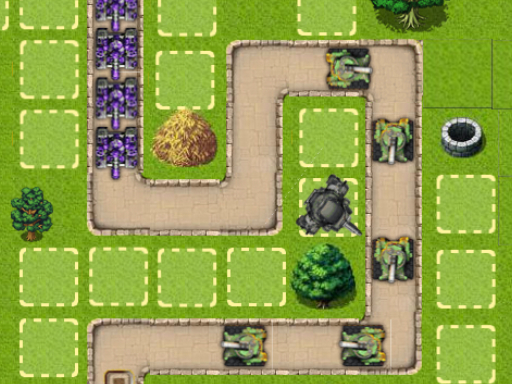
In a typical Tower Defense game, players begin with limited resources and a small set of defensive options. Early waves are usually manageable, giving players time to learn the map and establish a foundation. As the game progresses, enemies become faster, tougher, or more varied, forcing the player to adjust strategy. Some enemies may resist direct damage, while others may move in groups or split apart after being hit. This steady escalation keeps the experience tense and rewarding, because every new wave tests whether the player’s setup can hold under pressure.
The appeal of Tower Defense comes from the balance between simplicity and depth. On the surface, the rules are easy to understand. You build towers, earn money, and survive. Underneath that simple structure lies a layer of careful optimization. Where should a tower be placed to cover the longest stretch of road? Is it better to upgrade one powerful defense or spread resources across several weaker ones? Should the player invest in slowing enemies, dealing area damage, or focusing on high single-target damage? These choices create a satisfying loop of experimentation and improvement.
Many Tower Defense games also offer different tower types, each with a specific role. Archers, cannons, magic towers, traps, and support structures can all contribute in different ways. Some are best for early waves, while others become essential later when stronger enemies appear. The player learns to combine them into a layered defense, using one tower to weaken enemies, another to slow them, and another to finish them off. That combination of roles gives the game its tactical variety and encourages players to think several moves ahead.
Another important part of the genre is map design. Good Tower Defense maps are more than just paths on a screen. They shape the entire strategy by controlling chokepoints, curves, open spaces, and branching routes. A narrow path may favor splash damage, while a long winding road may reward towers with wide range. Some maps include multiple entry points, forcing players to divide attention and manage risk across several fronts. Because of this, map awareness is just as important as tower strength.
Tower Defense remains popular because it offers a clear sense of progress. Each successful wave feels earned, and each improvement in strategy is visible immediately. Players can see the consequences of their choices as enemies are stopped, slowed, or overwhelmed. The genre also supports replayability well, since different strategies can lead to different outcomes. Whether played casually or competitively, Tower Defense delivers a focused and engaging experience centered on smart decisions and rising pressure.
. Tagged Tower Defense Games