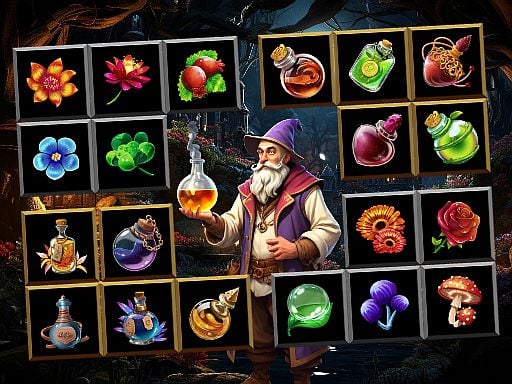
1010 Elixir Alchemy
Popular Games
Last Played
What makes puzzle games so enduring is their flexibility. They can be built around shapes, numbers, colors, words, paths, physics, symbols, or abstract rules, yet they all share the same essential promise: a challenge that is fair, readable, and rewarding to solve. Some puzzles focus on speed and pressure, while others encourage slow, careful thinking. Some give players a fixed set of moves and ask them to find the best sequence, while others build entire worlds from a single mechanic and let curiosity lead the way.
The best puzzle experiences respect the player’s intelligence. They do not rely on guesswork or hidden tricks. Instead, they create a clear set of rules and then let those rules produce interesting complications. Every solved stage feels earned because the answer was always present in the design, waiting to be noticed. That balance between difficulty and clarity is what keeps players engaged. A puzzle should challenge, but it should also teach. As the player improves, they begin to see beyond the immediate problem and recognize deeper patterns that apply across many levels.
Visually, puzzle games can take many forms. Some are clean and minimal, using simple geometry to keep the focus on logic. Others use rich themes, story elements, or atmospheric art to give each challenge more personality. The presentation may be playful, elegant, mysterious, or even experimental, but the structure underneath remains important. Good visual design helps the player understand what matters, what has changed, and what might happen next. In a puzzle game, every detail should support comprehension rather than distract from it.
Part of the appeal of puzzles is that they create a strong sense of progress. Even when a challenge is difficult, the player can usually feel that each attempt adds knowledge. Failure is rarely wasted, because every mistake reveals something useful about the system. That makes puzzle games especially satisfying for players who enjoy mastery. They offer a steady climb from confusion to understanding, and that transformation feels meaningful because it comes from the player’s own thought process.
Puzzle games also have broad appeal because they suit many different moods and settings. They can be relaxing and meditative, or tense and competitive. They can be played in short sessions or explored for hours. They work well on mobile devices, computers, consoles, and handheld systems because their core pleasure does not depend on complex controls. What matters is the design of the problem and the elegance of the solution.
At their best, puzzle games turn thinking into play. They transform logic into discovery, repetition into learning, and uncertainty into a satisfying answer. Whether the challenge is arranging tiles, matching patterns, navigating mazes, or uncovering a hidden rule, the genre continues to endure because it gives players a rare and rewarding experience: the chance to solve something beautiful.
. Tagged Puzzle Games