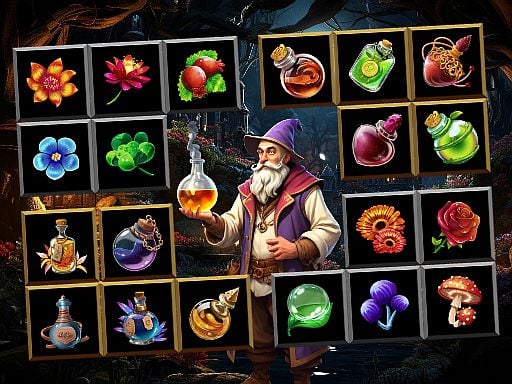
1010 Elixir Alchemy
Popular Games
Last Played
The origins of geometry can be traced back to ancient civilizations, especially Egypt, Babylon, and Greece. Early people used geometric ideas to measure land, build monuments, and map the stars. Over time, mathematicians such as Euclid organized these ideas into a logical system. His work, especially Elements, became one of the most influential mathematical texts in history. Euclidean geometry focuses on flat surfaces and follows a set of postulates that describe points, lines, and planes. Later, mathematicians expanded geometry into new forms, including non-Euclidean geometry, which studies curved spaces and became important in modern physics and cosmology.
Geometry is divided into many branches, each exploring different aspects of space. Plane geometry deals with flat figures like circles, triangles, rectangles, and polygons. Solid geometry studies three-dimensional objects such as cubes, spheres, cylinders, pyramids, and cones. Analytic geometry combines algebra and geometry by using coordinates to describe shapes and equations to represent lines and curves. Differential geometry examines curves and surfaces using calculus, while projective geometry focuses on how figures appear from different viewpoints. Each branch offers unique tools for solving problems and understanding spatial relationships.
In everyday life, geometry is everywhere. Architects use geometric principles to design buildings that are stable, functional, and visually appealing. Engineers rely on geometry to create bridges, machines, vehicles, and electronic devices. Artists and designers use shapes, proportions, patterns, and symmetry to produce balanced and attractive works. Even nature is full of geometric patterns, from the hexagonal structure of honeycombs to the spirals found in shells and galaxies. Geometry helps us recognize these patterns and appreciate the order hidden in the world around us.
Learning geometry also strengthens important thinking skills. It encourages logical reasoning, problem solving, visualization, and the ability to break complex ideas into smaller parts. Students often begin by studying basic terms such as line segments, rays, angles, and polygons before moving on to more advanced concepts like congruence, similarity, transformations, and proofs. Understanding geometry builds confidence in mathematics and prepares learners for future study in science, technology, and design fields.
Today, geometry remains a powerful and practical subject. It is used in computer graphics, robotics, navigation, engineering simulations, medical imaging, and game design. Modern technology often depends on geometric calculations to create realistic environments and accurate models. Whether in education, innovation, or daily life, geometry continues to shape the way we see and interpret the world. Its timeless ideas connect abstract reasoning with real-world application, making it an essential part of human knowledge.
. Tagged Geometry Games