1010 Elixir Alchemy
Popular Games
Last Played
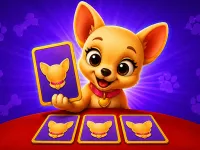
In many games, cards work because they are immediately readable. A player can glance at a card and understand its value, suit, effect, or role without needing a long explanation. This clarity keeps the pace moving and makes card games accessible to newcomers while still supporting advanced play for experienced players. A well-designed card system can reward planning, memory, timing, and careful resource management, all within a compact format that is easy to carry and easy to play anywhere.
Card games also have a unique balance between control and uncertainty. A shuffled deck introduces randomness, but the way a player uses the hand they are dealt often matters more than the initial draw. This tension creates engaging decisions. Should a player save a strong card for later, spend it now for a quick advantage, or combine it with another card to unlock a bigger effect? These kinds of choices are the heart of many memorable card experiences.
Another strength of cards is their flexibility in theme and presentation. A card can be made to fit almost any setting, from fantasy and science fiction to sports, mystery, horror, or abstract logic. The visual design of the card can communicate style and mood at a glance, while the rules behind it shape the gameplay. Because of this, cards are often used to build games that feel both familiar and highly original. Developers can create simple rule sets for quick matches or layered systems with deep progression and long-term strategy.
Cards also encourage social interaction. Many card games are naturally competitive, but they can just as easily support cooperation, negotiation, bluffing, and shared problem-solving. A group of players around a table can read each other’s choices, react to unexpected turns, and build tension through small but meaningful actions. Even in digital games, card mechanics often preserve this sense of anticipation and decision-making, making each round feel personal and dynamic.
For players, cards often become more than just game pieces. They can represent identity, collection, mastery, and preference. Some players enjoy building optimized decks, while others enjoy experimenting with unusual combinations or collecting rare designs. This gives card games a long life beyond a single session. They invite replayability because the same system can produce different outcomes again and again, depending on the deck, the opponent, and the choices made during play.
In the end, the card remains a timeless game format because it is both simple and expressive. It can be physical or digital, casual or highly competitive, rules-heavy or elegantly minimal. A single card can hold the logic of an entire game in a small space, making it one of the most efficient and creative tools in game design.
. Tagged Card Games